Hello, I'm Jindou Jia

I am a postdoc in the MARS Lab at Nanyang Technological University (NTU), working with Prof. Jianfei Yang. I completed my Ph.D. in 2025 from the School of Automation Science and Electrical Engineering and Shenyuan Honors College, Beihang University, China. I was supervised by Prof. Lei Guo, Prof. Xiang Yu, and Prof. Kexin Guo. My research aims at generalizable robot learning. By integrating world models, generative policies, and uncertainty prediction with physical priors, I work toward robots that reliably transfer from training to unseen environments.
Research Interests

Robot learning World model Generative policy Uncertainty prediction
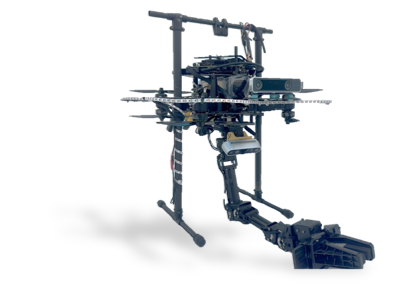
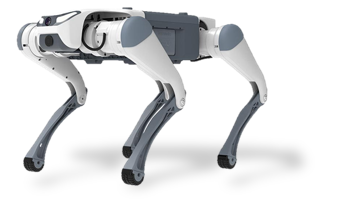
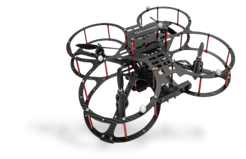
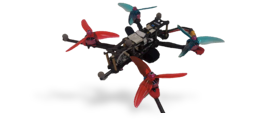
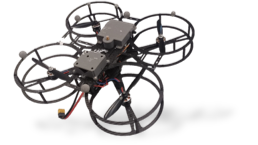
๐ŸšDrone ๐Ÿ•Quadruped robot ๐ŸฆพRobotic arm ๐Ÿค–Humanoid robot

News

  • May 2026: ๐Ÿ“š Released our World Model survey for robot learning.
  • Apr 2026: ๐ŸŽ‰ A2A policy have been accepted by 2026 RSS๏ผ
  • Feb 2026: ๐ŸŽ‰ Two papers have been accepted by 2026 ICRA๏ผ
  • Nov 2025: ๐Ÿš€ Started my new position as a Postdoc at NTU๏ผ
  • Jul 2025: ๐ŸŽ‰ FORESEER has been accepted by IJRR๏ผ
  • Jun 2025: ๐Ÿ˜Š Passed my PhD doctoral dissertation defense๏ผ
  • Feb 2025: ๐ŸŽ‰ Feedback neural network has been selected as an oral paper by 2025 ICLR (top 1.8%)๏ผ
  • Jul 2024: ๐ŸŽ‰ Our paper, TRACE, won the Best Student Paper Award at IEEE ICCA 2024!
  • Oct 2023: ๐ŸŽ‰ EVOLVER has been accepted by T-RO๏ผ

Publications

First/co-first/corresponding author

Preprint

Preprint
Physics filtering favors the generalization of robot learning

Physics filtering favors the generalization of robot learning

Preprint, 2026

We propose PhyFilter, which enhances both generalization and interpretability of robot learning. PhyFilter operates by correcting learning outcomes according to readily accessible physical differential structure and real-time state feedback.

arXiv'26
World model for robot learning: A comprehensive survey
arXiv'26
Optimizing control-friendly trajectories with self-supervised residual learning

Optimizing control-friendly trajectories with self-supervised residual learning

arXiv, 2026

The presented trajectory optimizer outputs trajectories that are friendly to the following control level.

2026

RSS'26
Action-to-action flow matching

Action-to-action flow matching

Robotics: Science and Systems (RSS), 2026

We introduces A2A, an efficient generative paradigm that replaces noise-based initialization with action-to-action transport.

ICRA'26
Learning-based observer for coupled disturbance

Learning-based observer for coupled disturbance

IEEE International Conference on Robotics and Automation (ICRA), 2026

We present a learning-based observer, enabling accurate prediction of the coupled disturbance consisting of internal uncertainties and external disturbances.

2025

IJRR'25
FORESEER: Recognize and utilize uncertainties by integrating data-based learning and symbolic feedback

FORESEER: Recognize and utilize uncertainties by integrating data-based learning and symbolic feedback

The International Journal of Robotics Research (IJRR), 2025

We present two converged uncertainty prediction frameworks, enabling accurate prediction of two general kinds of uncertainties, respectively.

ICLR'25
Feedback favors the generalization of neural ODEs

Feedback favors the generalization of neural ODEs

International Conference on Learning Representations (ICLR), 2025
Oral Presentation

We present feedback neural networks, showing that a feedback loop can flexibly correct the learned latent dynamics of neural ordinary differential equations (neural ODEs), leading to a prominent generalization improvement.

2024

T-RO'24
EVOLVER: Online learning and prediction of disturbances for robot control

EVOLVER: Online learning and prediction of disturbances for robot control

IEEE Transactions on Robotics (T-RO), 2024

We present a framework, namely EVOLVER, to mimic the bio-behavior for robotics to achieve rapid transient reaction ability and high precision steady-state performance simultaneously.

2022

R-AL'22
Accurate high-maneuvering trajectory tracking for quadrotors: A drag utilization method

Accurate high-maneuvering trajectory tracking for quadrotors: A drag utilization method

IEEE Robotics and Automation Letters (R-AL), 2022

Different from standard approaches that achieve precise tracking by feedforward compensating the estimated drag, this work presents a scheme to appropriately utilize drag.

T-AES'22
Agile flight control under multiple disturbances for quadrotor: Algorithms and evaluation

Agile flight control under multiple disturbances for quadrotor: Algorithms and evaluation

IEEE Transactions on Aerospace and Electronic Systems (T-AES), 2022

A scheme of anti-disturbance agile flight control is developed for a maneuverable quadrotor unmanned aerial vehicle, subject to the aerodynamic drag, dynamic shift of center of gravity, and motor dynamics.

ICUAS'22
Flight control for quadrotor safety in the presence of CoG shift and loss of motor efficiency

Flight control for quadrotor safety in the presence of CoG shift and loss of motor efficiency

International Conference on Unmanned Aircraft Systems (ICUAS), 2022
Oral Presentation

A safety control strategy based on a novel nonlinear disturbance observer and geometric control is developed for a quadrotor unmanned aerial vehicle, subject to the disturbances caused by center-of-gravity shift and loss of motor efficiency.

2020

CEP'20
Multiple observers-based anti-disturbance control for a quadrotor UAV against payload and wind disturbance

Multiple observers-based anti-disturbance control for a quadrotor UAV against payload and wind disturbance

Control Engineering Practice, 2020

This paper presents a multiple observers-based anti-disturbance control scheme against multiple disturbances for a quadrotor unmanned aerial vehicle.

2019

CAC'19
Dual-disturbance observers-based control of UAV subject to internal and external disturbances

Dual-disturbance observers-based control of UAV subject to internal and external disturbances

China Automation Conference, 2019
First Prize of Outstanding Paper

This paper presents an embedded micro loop to enhance the anti-disturbance performance for unmanned aerial vehicles.